
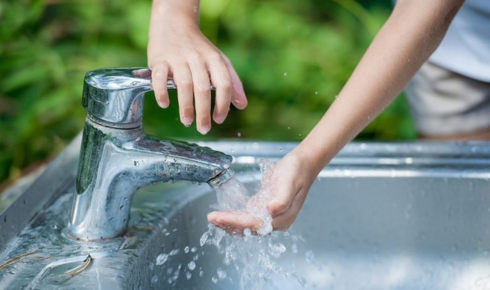
Most of us drink water on autopilot. We fill a glass, take a sip, and move on. Water is supposed to be simple—clear, neutral, dependable. But sometimes a quiet question creeps in, usually after reading a headline or hearing a passing comment: Is my water actually as clean as I think it is?
That question doesn’t come from panic. It comes from curiosity. From wanting to understand what’s behind the everyday things we rely on without thinking twice.
When water chemistry becomes personal
Water quality discussions often sound technical, even intimidating. Numbers, limits, contaminants. It’s easy to tune out. But the moment water chemistry touches daily life—especially health—it stops being abstract.
One of the topics that comes up again and again in these conversations is nitrates in drinking water. Not because they’re new or mysterious, but because they’re common, invisible, and quietly misunderstood. You can’t taste them. You can’t smell them. Yet they’re part of many water sources, especially in areas influenced by agriculture or groundwater use.
That alone is enough to make people want to learn more.
Understanding where nitrates come from
Nitrates don’t appear out of nowhere. They’re part of the natural nitrogen cycle, which means they’ve always existed in soil and water to some degree. Plants need nitrogen to grow, and nitrates are one form it takes.
The issue arises when levels increase beyond what water systems can easily handle. Fertilizers, septic systems, and runoff from farmland can all contribute. Over time, these sources allow nitrates to seep into groundwater, especially in rural or semi-rural regions.
It’s not about blame. It’s about understanding how human activity and natural systems overlap in ways we don’t always see.
The health conversation, without the drama
Any discussion of water quality eventually circles back to health. Not in a dramatic, alarmist way, but in a practical one. Water is something we consume every single day. Small exposures, repeated over years, matter more than one-off events.
This is where drinking water health becomes a long-term perspective rather than a short-term fear. Regulatory agencies set limits for a reason, and most public water systems work hard to stay within them. But private wells and smaller systems don’t always have the same oversight, which is why awareness matters.
Health, in this context, isn’t about immediate symptoms. It’s about confidence. Knowing that what you’re drinking supports your body instead of quietly working against it.
Why nitrates are tricky to detect
One of the reasons nitrates cause concern is how easily they blend in. Unlike sediment or sulfur, they don’t announce themselves. Water can look, smell, and taste perfectly fine while still containing elevated nitrate levels.
That invisibility is what pushes many homeowners toward testing. Not because they suspect a problem, but because they want certainty. A clear answer feels better than constant wondering.
Testing isn’t about assuming the worst. It’s about replacing guesswork with knowledge.
Nature isn’t always the villain
It’s easy to frame nitrates as a purely human-made problem, but that’s not entirely fair. There are natural sources of nitrates that exist regardless of farming or development. Decomposing organic matter, soil composition, and even certain rock formations can contribute small amounts over time.
The difference lies in concentration. Nature tends to add nitrates slowly and in balance. Human activity can accelerate the process, sometimes faster than ecosystems can adjust.
Understanding this distinction helps keep the conversation grounded. It’s not about fearing nature or industry—it’s about managing impact thoughtfully.
How awareness changes behavior
Something interesting happens once people learn more about their water. They don’t usually panic or overhaul everything overnight. Instead, they make small, intentional choices.
Some start testing annually instead of assuming consistency. Others look into treatment options designed specifically for their water profile. A few simply become more mindful, paying attention to seasonal changes or nearby land use.
Knowledge rarely leads to extremes. It leads to nuance.
Treatment without overcorrection
One of the biggest misconceptions about water treatment is that it has to be aggressive or complicated. In reality, effective solutions tend to be targeted. You address what’s present, not what might be.
For nitrates, this often means systems designed specifically to reduce them without stripping water of everything else. The goal isn’t purity for purity’s sake. It’s balance. Water that supports health while still feeling natural.
Overcorrecting can be just as frustrating as doing nothing at all.
Water as a long-term relationship
We tend to think of water as a utility, but it behaves more like a relationship. It responds to its environment. It changes slowly. It reflects what happens around it.
When land use changes, water changes. When seasons shift, water shifts too. Recognizing this dynamic helps explain why testing once isn’t always enough and why ongoing awareness matters more than one-time fixes.
Good water stewardship is less about control and more about attention.
A calmer way to think about water quality
The internet loves extremes. Either everything is fine or everything is toxic. Real life sits somewhere in between. Most water issues aren’t emergencies. They’re signals. Invitations to learn, adjust, and stay informed.
Thinking about nitrates doesn’t mean distrusting your water. It means respecting it enough to understand it.
A thoughtful ending, by design
Water doesn’t need to be perfect to be good. It needs to be understood. When you take the time to learn what’s in your water and how it got there, you replace uncertainty with clarity.
And clarity has a calming effect.
You drink your water knowing why it tastes the way it does. You make decisions based on facts instead of fear. Water becomes, once again, what it was meant to be—simple, supportive, and quietly reliable.
Sometimes, that’s all peace of mind really is.